
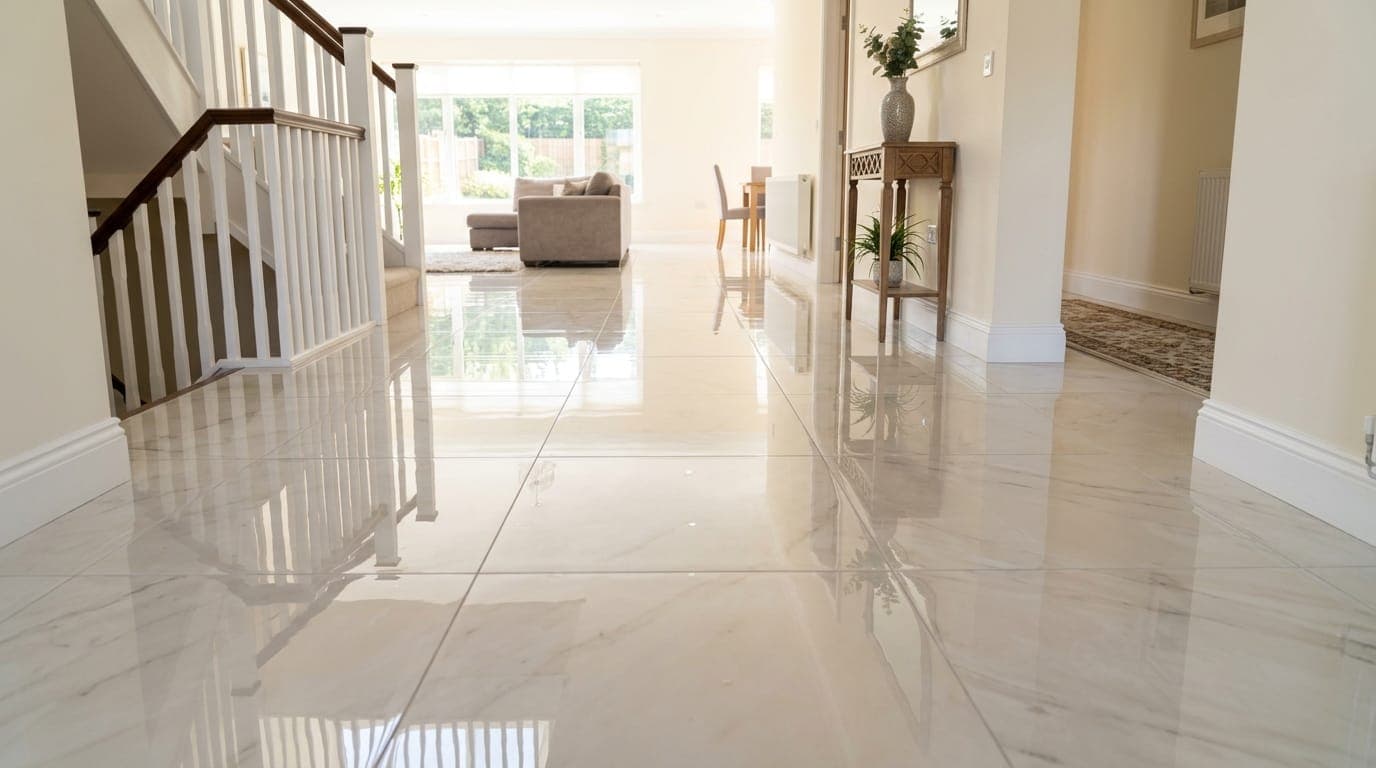
The person scrubbing grout with a toothbrush on a Saturday is usually working too hard on the wrong step. Scrubbing is the last thing you should rely on. Time and rinsing do most of the work.
First, some context on why grout looks so much worse than the tile next to it. Glazed tile is smooth and sheds dirt. Grout is a porous mix of cement and sand, recessed a hair below the tile face, so every mop pass drains dirty water right into it. The water evaporates and leaves the soil behind. Do that a few hundred times and a light gray grout line turns charcoal.
Which means your mop is part of the problem. So is the bucket. By the third room, most people are mopping with water dirtier than the floor.
A routine that saves your knees
Start dry. Vacuum or sweep the floor completely, and run the vacuum's crevice tool down the grout lines in the kitchen and entry. Loose grit turns into mud as soon as it gets wet, and you'll just be pushing it into the lines.
Pick a cleaner made for your tile. For most glazed ceramic and porcelain, a pH-neutral or mildly alkaline tile cleaner works. Natural stone like travertine, marble, or slate needs a stone-safe product; acids etch it.
Then let it sit. This is the step people skip, and it's the one that replaces the scrubbing. Spray or spread the cleaner on a section of about four by four feet and leave it alone for 5 to 10 minutes. Don't let it dry out on the floor. The chemistry needs that time to loosen what's in the grout.
Brush lightly. A stiff nylon grout brush, worked along the lines with modest pressure, does more after a proper dwell than ten minutes of hard scrubbing without one. Skip wire brushes, which scratch tile and chew up grout.
Now pick it up. This is the second step everybody skips. If you just mop the loosened dirt around, it settles right back into the grout lines. Use a wet-dry vac, or a clean towel and a bucket of fresh water you change often. Then rinse once more with plain water to take off any cleaner film.
Dry the floor with a fan or a towel. Grout that dries slowly wicks residue up from below and can look blotchy.
Habits that make the next cleaning easier
Most homes use too much floor cleaner. The extra product just dries into a dull, sticky layer that holds footprints and darkens grout faster. Cut back to half the label amount and see if the floor looks better.
Kitchens and bathrooms collect different things. In the kitchen, grease and food spatter are the problem, and an alkaline cleaner handles them. Bathrooms build up soap scum and hard-water film, which call for a cleaner made for that.
Keep bleach off colored grout, and go easy on vinegar. Bleach fades tinted grout unevenly, and repeated vinegar breaks down the cement in grout over time. It also etches any natural stone it touches.
Where DIY runs out
Here's the honest limit, and it's why we're not shy about the DIY routine above: it works well on grout that's merely dirty from the last few months. Grout that has gone dark over years of mopping has soil packed down in the pores, below where a hand brush reaches. You can brush that grout all afternoon and it'll lighten a shade. That's usually when people call us.
We do it with a machine buffer. After a look at the floor and a price you agree to, the tech runs the cleaner across the tile and works it down into the joints with the buffer. A machine keeps the same pressure on the hundredth grout line that it had on the first, and nobody's wrists give out. The loosened soil gets lifted off, then the floor is rinsed and dried. More than one customer has found out mid-job that their "gray" grout was beige all along. The full rundown is on our tile and grout service page.
Our work is cleaning. Cracked or crumbling grout is a repair job for a tile contractor, and we'll point it out if we see it.
The tile coupon on our coupons page is $45 off, which goes a long way on a kitchen and a couple of bathrooms.