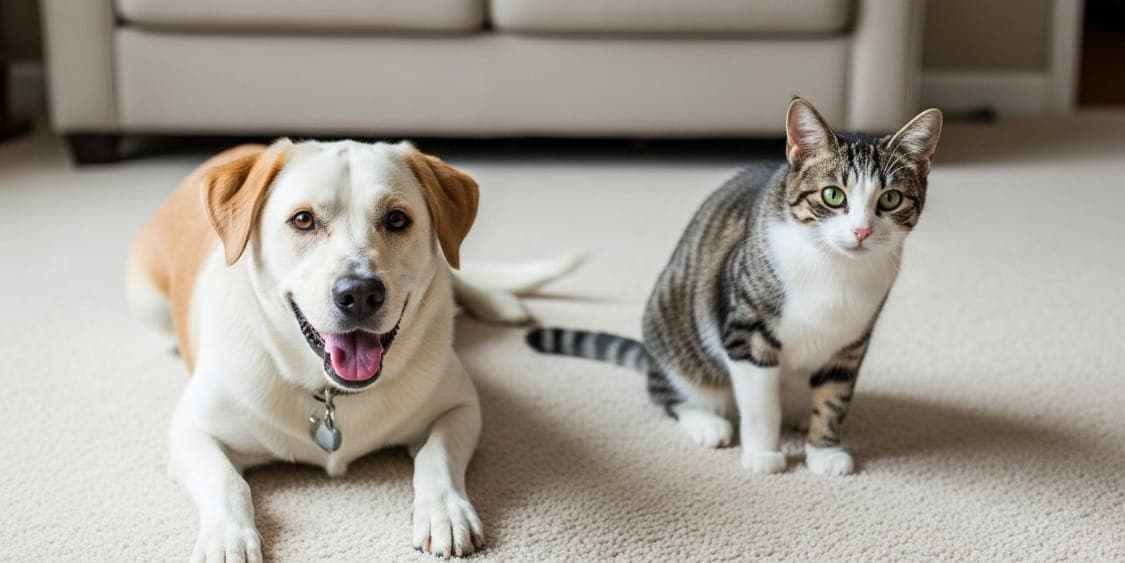
A pet accident on carpet is almost always bigger underneath than it looks on top. You blot the part you can see. The rest keeps going down.
That's the whole problem with pet stains in one sentence, and it's why a spot that "came right out" can be causing trouble a year later. Under the surface, it goes like this.
It goes deeper than the carpet
Carpet is layered. There's the pile you walk on, a backing that holds the fibers, a foam or rebond pad under that, and then the subfloor, wood or concrete depending on how the house was built.
Urine moves through all of it. The pile barely slows it down. The backing lets it through. The pad acts like a sponge and holds onto a lot of it, and with a big enough accident, or the same spot used over and over, it reaches the wood.
Why the smell comes back on humid days
As urine dries, it leaves salts and residue behind. Those don't smell much when they're dry. Give them moisture and they wake up. A muggy afternoon, a mopped floor nearby, a carpet cleaning with too much water: any of those can bring back an ammonia smell from an accident you forgot about.
This is also why air fresheners and scented sprays lose the fight. They work on the air for an hour. The source is still sitting in the pad.
Stains that rise back to the surface
You clean a spot, it looks great, and three days later there's a faint yellow ring in the same place. That's wicking. When the carpet gets wet, moisture dissolves the residue in the pad and backing, and as the carpet dries from the top down, that liquid wicks up the fibers and leaves the stain behind at the tips.
Rental machines and heavy home shampooing make this worse, because they put a lot of water in and pull only some of it out. Every time you soak a pet spot, you're giving it another chance to climb.
What it does to the carpet over time
Dried urine is not neutral. Left alone, it can change the dye in the fibers, especially on lighter carpet, which is where the permanent yellow and brown stains come from. Once the color itself has changed, no cleaning brings it back. We'd rather tell you that now than after the job.
The fibers can also get stiff and brittle in the affected area. Walk on them long enough and that patch looks matted and worn compared to the carpet around it.
There's a behavior cost too. Dogs and cats return to places that smell like they've been used. An untreated spot quietly tells them it's an acceptable bathroom, and one accident turns into a habit. Lots of owners blame the pet for something the carpet is encouraging.
And moisture trapped in a pad that never fully dries is how you get mildew under the carpet and a musty smell that lingers in the room. That happens most often after heavy DIY cleaning, not from the original accident.
When it's past cleaning
In the worst cases, a pad section is saturated beyond saving, or the subfloor has absorbed enough urine to smell on its own. That's a job for a flooring installer: cutting out the pad, treating the wood, putting down new pad. We don't do that work, and we'll say so if we see it.
What actually fixes it
Two things have to happen. The urine residue has to be broken down where it lives, and the carpet has to come out of it without being soaked.
The enzyme in our pet stain treatment is live, and we put down enough of it to reach the pad, where it feeds on the urine residue itself. Then the carpet gets cleaned with a low-moisture method so nothing gets pushed deeper or wicks back up. Most rooms are dry and usable the same afternoon.
Fresh accidents are always easier. A spot from last week is a simple job. A spot from last spring, used five times since, is a bigger one.
So the real advice here is boring: don't let a pet stain sit because it looks gone. If a spot ever smells on a humid day, that's your sign. The pet treatment is $25 off on our coupons page, and the sooner we get to it, the better the odds of a clean result with no ghost of the stain left behind.